Beyond the div: Why Semantic HTML is the Foundation of a Professional Web
It's not just about order. Semantic HTML is the language search engines and screen readers use to understand your content. Meet the essential tags.
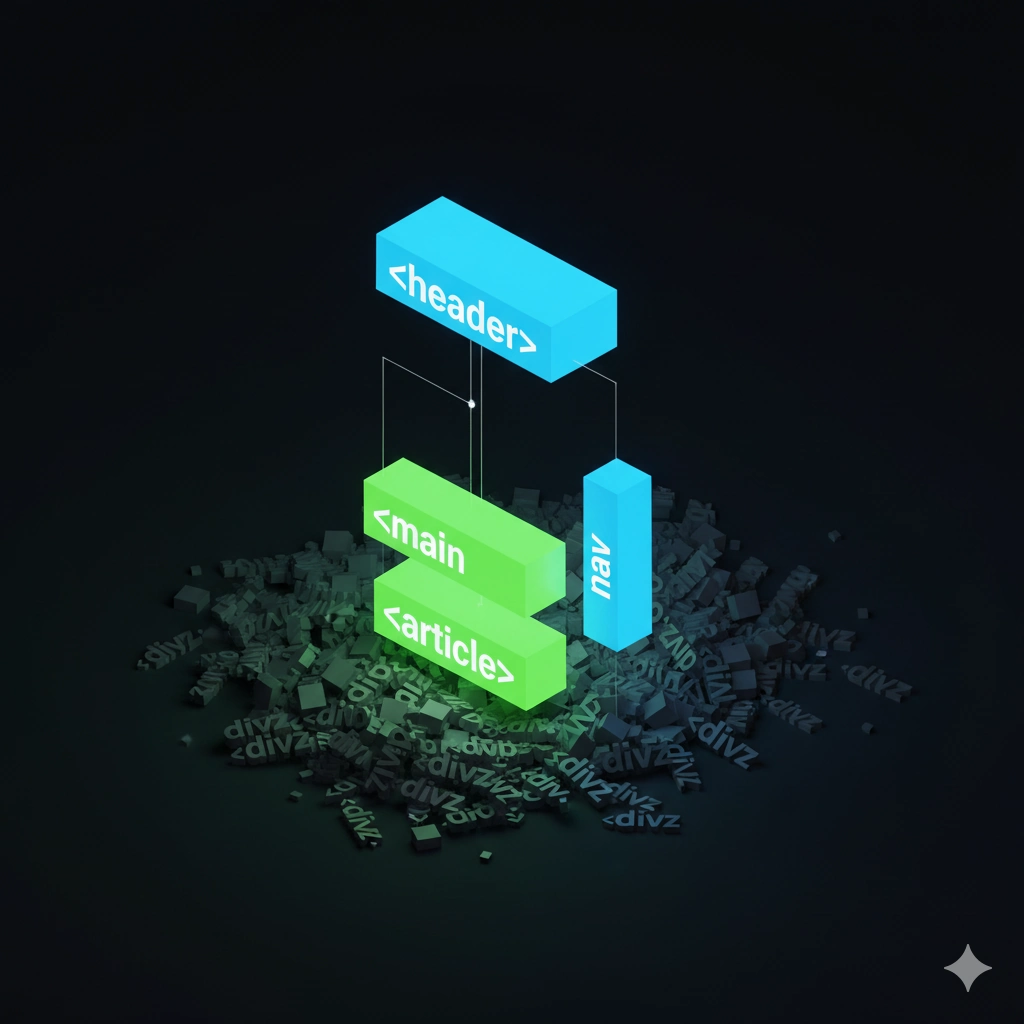
## The Language of Structure
When you program a website, you are not just layouting for people viewing the screen; you are also doing it for Google bots and assistive technologies. Semantic HTML gives meaning to data.
## Key Tags You Must Use
Beyond the classics, there are tags that separate a basic site from a professional one:
## The Real Benefit: SEO and Accessibility
A hierarchically well-structured site allows a screen reader to jump between headings (`<h1>` to `<h6>`) logically. For Google, this translates into better indexing. If your website is easy for a bot to read, it will rank better. Accessibility is not an 'extra,' it is a competitive advantage and, in many countries, a legal requirement.